

Event Highlights: Researchers Bringing Evidence into Real-World Solutions with UN Agencies
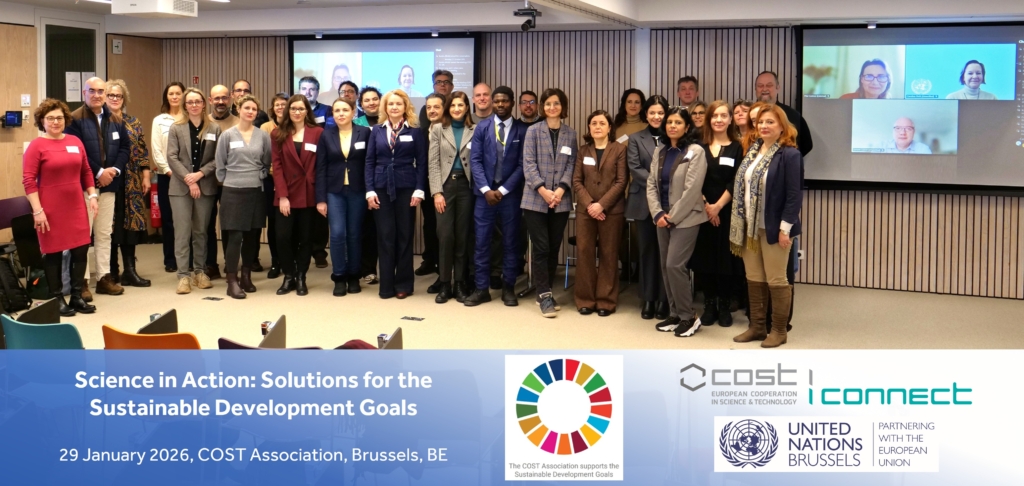
NORRAG’s Moira Faul joined a meeting in Brussels on 29 January where researchers from the European Cooperation in Science and Technology (COST) programme presented some of the latest cutting-edge research to advance the Sustainable Development Goals (SDGs) to a number of UN agencies in Brussels, supported by United Nations Regional Information Centre for Western Europe (UNRIC).
The initiative aimed to identify synergies and explore future collaboration to support researchers to navigate UN policy making, at the same time as supporting UN focal points in identifying new opportunities, facilitating connections with relevant agencies and partners, and providing guidance on funding and key events to enhance the impact of research.
Opening the event, Ronald de Bruin, Director of the COST Association, emphasised that “by linking the multidisciplinary networks of the COST Actions present today with the UN’s strategic objectives, we are ensuring that the world’s most pressing challenges are met with evidence-based, peer-reviewed reality.”
At a time of growing global challenges, science plays a crucial role in shaping a better future for our planet, providing evidence as the foundation for innovative solutions. For Caroline Petit, Deputy Director of the United Nations Regional Information Centre for Western Europe (UNRIC), “Science and evidence are at the heart of everything the UN does –whether it’s advancing climate action, improving food systems, promoting gender equality, or building more resilient societies. Each Sustainable Development Goal relies on research and the insights that science provides.”
“Science is the backbone of multilateralism and one of our most powerful tools to advance the Sustainable Development Goals,” said Veronika Hunt Šafránková, Head of the United Nations Environment Programme (UNEP) Brussels Office.
“Sometimes dismissed as merely elite whining, academic freedom and the autonomy of higher education institutions are actually fundamental to the pursuit of knowledge and societal progress, the functioning of a democratic society, and the right to education: to learn and to teach. SDG17 is not only the partnership goal; it also highlights the importance of science and technology to achieving all the other SDGs. Without academic freedom and institutional autonomy, we will not be able to produce the science needed for effective and useful policy and action for sustainable development.”
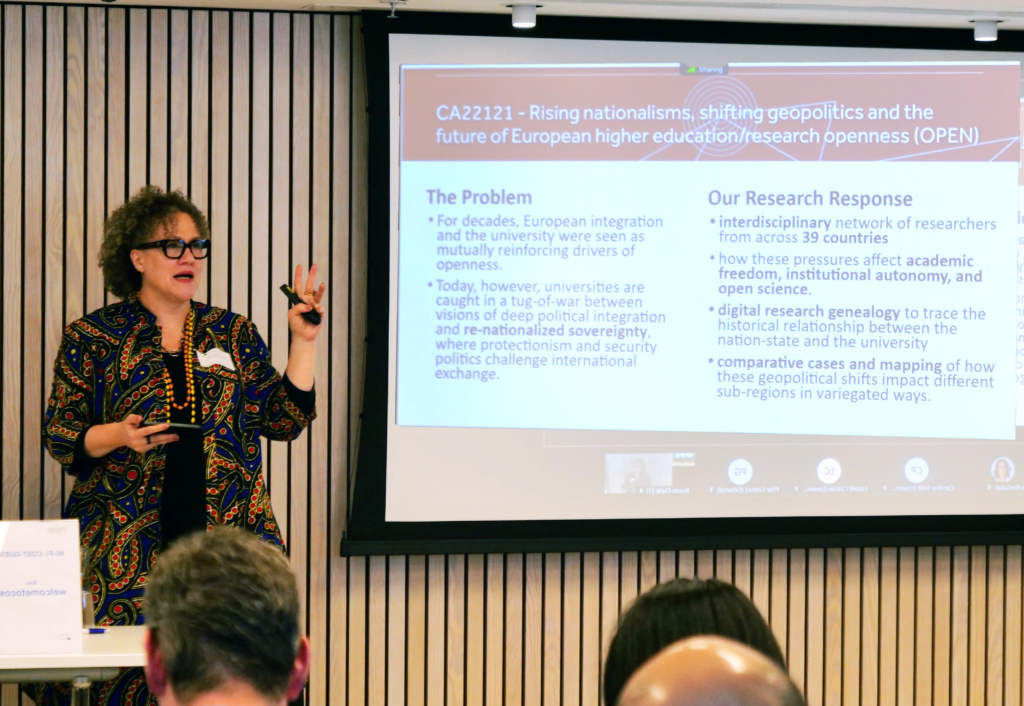
Moira Faul, member of the COST Action OPEN
©COST/Mª Victoria Serrano Blázquez
More than 20 researchers present at the event were connected with representatives from a variety of UN agencies, including the UN Environment Programme (UNEP), the UN Development Programme (UNDP), the International Organization for Migration (IOM), the Office of the United Nations High Commissioner for Refugees (UNHCR), the Food and Agriculture Organization (FAO), UNESCO, the United Nations Office for Outer Space Affairs (UNOOSA), and the United Nations Industrial Development Organization (UNIDO).