


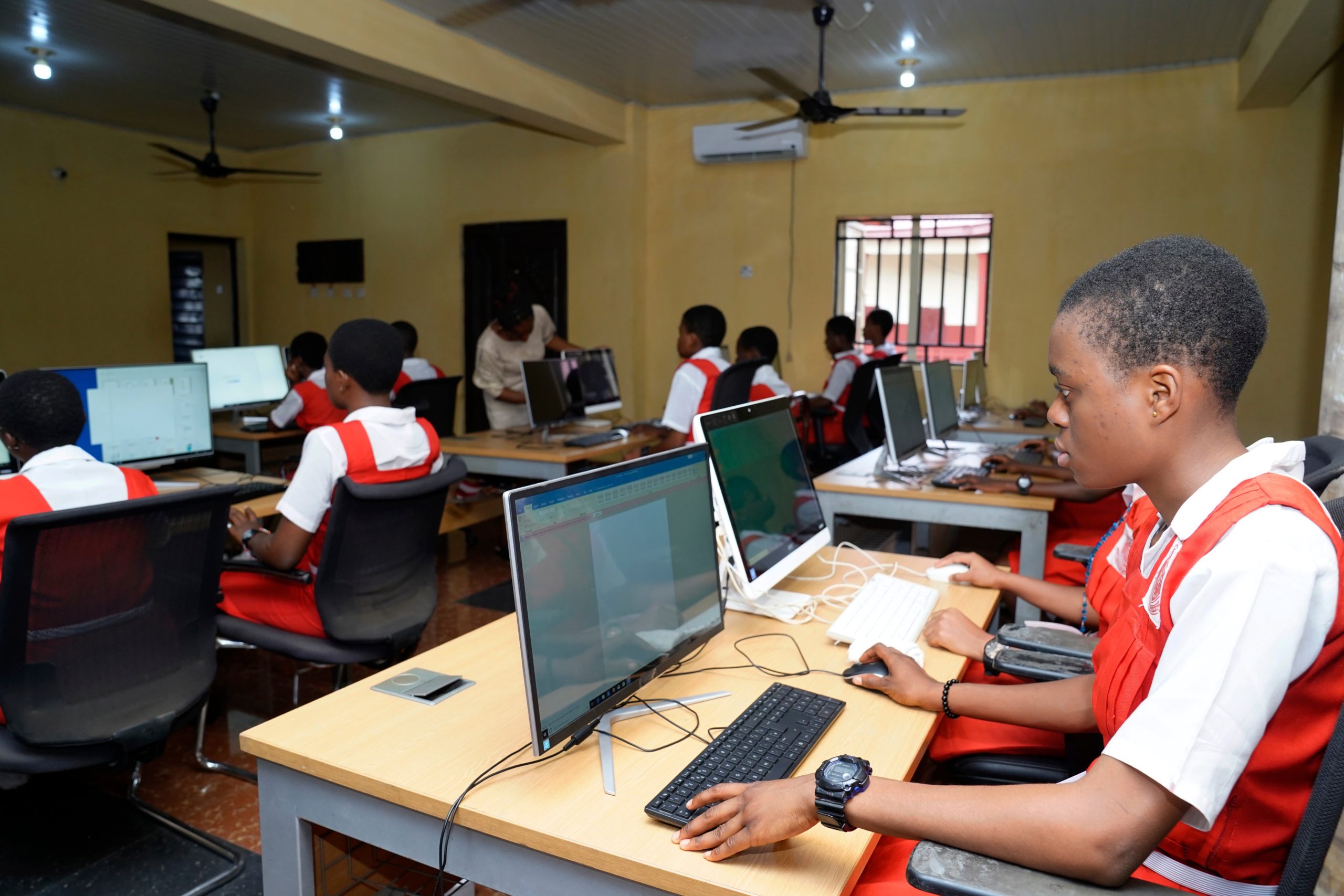
Empowering STEM Education from Within: Why the Global South Must Invest in its Own Scientific Future
In this blogpost, which is part of NORRAG’s Financing Education blog series, Joshua Sarpong and Bezawit Alamirew Wube argue that Global South countries would benefit from investing in STEM education; however, investments in STEM education are hampered by colonial legacies and donor dependencies.
Across the Global South, the promise of science, technology, engineering, and mathematics (STEM) education as a catalyst for development is widely acknowledged but largely underfunded. Despite the evidence that national success in STEM correlates with stronger economic growth, many countries in the Global South continue to invest far less than needed to cultivate scientific capacity. To break this cycle, we argue in our recent article published in the International Journal of Educational Development that the Global South cannot rely solely on donor aid to build its scientific future. The paper highlights how countries can strengthen domestic investment, governance and policy ownership to build resilient STEM systems that serve national priorities.
Recent global evidence shows that investment in STEM education drives innovation, job creation and economic transformation. Countries like South Korea and Singapore leveraged this insight to transform themselves from low-income to high-income economies in a few decades. In Africa, however, the story is quite different. Sub-Saharan Africa spends an average of just 0.51% of GDP on research and development, well below the global average of 1.79%. Only 9 of 49 African nations meet the global benchmark of allocating 20% of national budgets to education.
The consequences are evident: insufficient STEM infrastructure, weak digital ecosystems and overburdened education budgets that leave little room for innovation or capital development. Laboratories remain under-equipped, research output is limited, and too few students pursue STEM pathways; just 25% of enrolments in higher education are in STEM-related fields. In contrast, humanities, social sciences and business dominate the curriculum, a legacy of colonial educational systems designed to produce civil servants rather than scientists or engineers.
Colonial Legacies and Donor Dependencies
The challenges are not just financial; they are structural. Many African universities continue to reflect their colonial roots, prioritising social development goals and civil service preparation over research and innovation. While the humanities and social sciences are vital for shaping democratic, ethical and culturally grounded societies, their dominance has left the region ill-equipped to train and retain technical talent.
Although donor funding is helpful in many ways, it complicates matters further. Large-scale donor projects often come with conditions that align more with donor countries’ strategic interests than with recipient nations’ specific needs. This dynamic has led to academics chasing funding that is aligned with donor priorities rather than addressing urgent national challenges. In STEM, imported curricula and research agendas often lack contextual relevance, stifling local innovation.
Yet, donor support is not inherently problematic. Successful models – such as the African Centres of Excellence initiative supported by the World Bank – demonstrate that when donor engagement is aligned with national frameworks and driven by local leadership, it can meaningfully strengthen STEM ecosystems.
Rwanda, for instance, has embedded STEM education into national development visions such as Vision 2020 and Vision 2050. Despite limited resources, the government has consistently prioritised STEM in its budget, expanded digital access, and required donor projects to align with national plans.
Ethiopia’s Growth and Transformation Plans (GTP I & II) and Malaysia’s long-term investment in public STEM infrastructure also show that clear vision, domestic investment and strategic donor engagement can yield sustainable outcomes. Countries must cultivate their own funding streams, improve education governance and allocate a greater share of GDP toward STEM education. They must also define their own curriculum and research priorities – leveraging international partnerships when helpful, but never outsourcing educational strategy.
The global COVID-19 pandemic, economic shocks and geopolitical realignments (such as the recent withdrawal of major aid programmes) have exposed the fragility of donor-dependent models. If the Global South waits for the Global North to fund its STEM future, it may never come – or come at the cost of sacrificing local values and long-term sovereignty.
Reimagining STEM Education for Development
The Global South is at a crossroads. On one hand, there is an urgent need to expand domestic capacity in STEM to solve critical challenges, such as climate change, water scarcity, healthcare and food security. On the other hand, education systems must avoid replicating the imbalances of technocratic models that marginalise cultural, ethical and social inquiry.
As the Global South moves to strengthen its STEM capacity, it must avoid falling into the same trap as many countries in the Global North, which are now deprioritising the humanities in favour of short-term economic returns.
Investing in context-sensitive STEM systems, supporting inclusive and interdisciplinary learning, and asserting ownership over funding and curricula, countries in the Global South can reshape their education systems as engines of sustainable and equitable development. It is time to empower STEM education from within, not just to catch up with the world, but to lead it on new terms.
The Authors:
Joshua Sarpong is an Admissions Officer and higher education researcher at the University of Auckland, New Zealand. His work examines higher education policy, funding, governance and university–industry collaboration, with a focus on equity, access and institutional decision-making. Email: j.sarpong@auckland.ac.nz
Bezawit Alamirew Wube is a professional staff member at the University of Auckland with an academic background in Computer and Electrical Engineering as well as Marketing Management. Her research focuses on STEM education and strengthening education systems to promote innovation, inclusion and sustainable development in the Global South. Email: bezawit.wube@auckland.ac.nz