


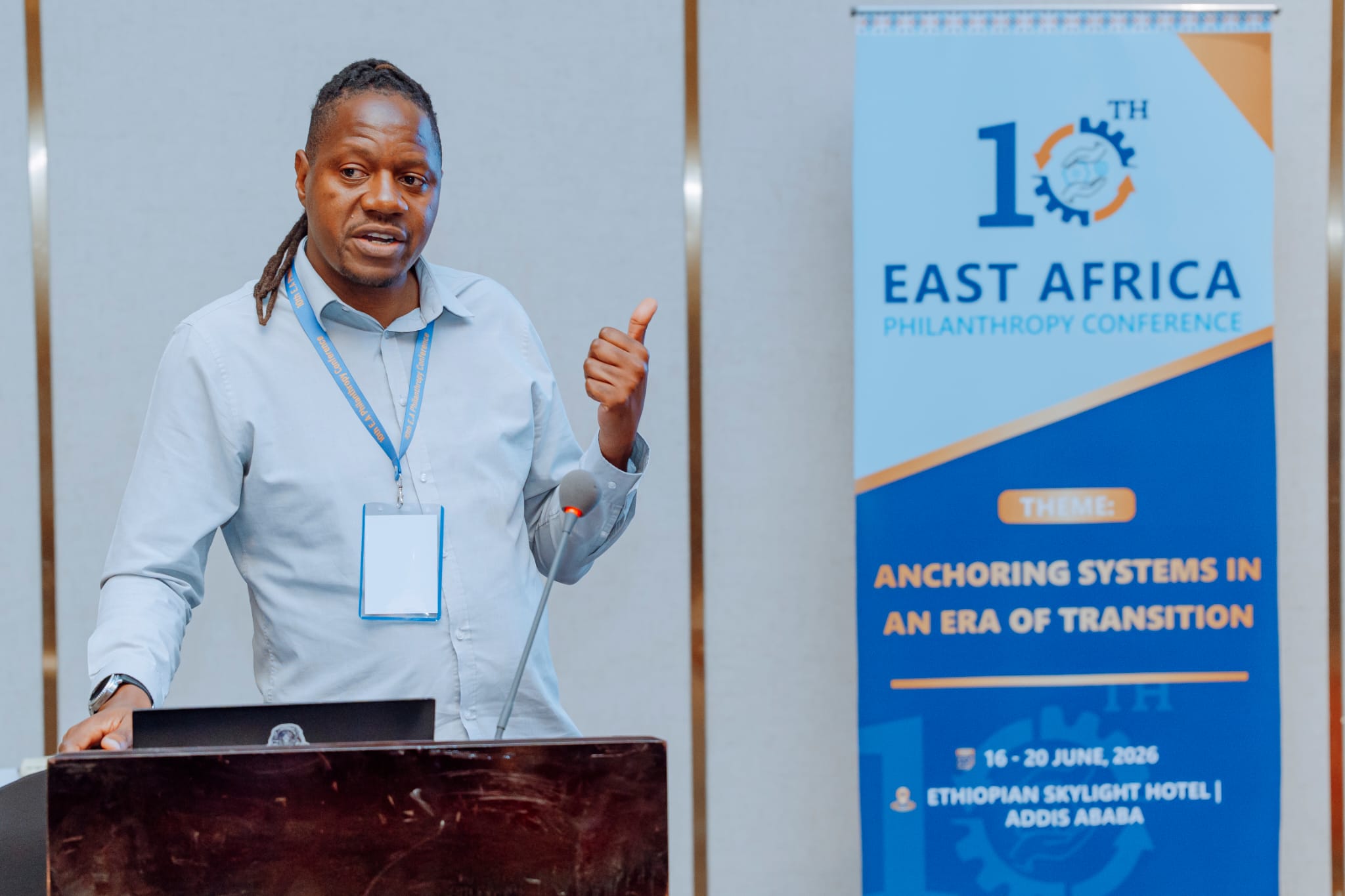
Event Highlights: From Research to Practice: Translating Lessons from Innovative Financing for Education into Governance Tools
The Bertha Centre for Social Innovation and Entrepreneurship of the University of Cape Town contributed its learnings from ongoing research on innovative financing for education (IFE) to the 10th East Africa Philanthropy Conference, held in Addis Ababa, Ethiopia from 16 and 19 June 2026. This conference brought together philanthropic organisations, civil society organisations, foundations, development practitioners and impact investors to explore the future of philanthropy and development finance in Africa. A discussion that has become of paramount importance against a backdrop of shifting aid architectures and growing interest in innovative finance. The conference provided an opportunity to reflect not only on how capital can be mobilised, but also on how financing mechanisms should be governed to achieve equitable development outcomes. Hillary Musarurwa contributed a technical session entitled Governance and Equity Guardrails in Innovative Finance Structures, translating emerging lessons from an ongoing research project, Innovative Financing for Education to Leave No One Behind, conducted in partnership with NORRAG, into a practical governance framework practitioners can apply across different innovative financing mechanisms.
The research moves beyond describing how innovative financing instruments are designed to understanding how they perform in practice and the importance of evaluation evidence to inform the improvement future instrument design, not only in terms of effectiveness and efficiency, but also with regards to equity considerations and their governance. The session therefore focused on governance questions that are relevant across financing models, including: Who defines success? Where does financial and operational risk ultimately sit? Who is responsible for repaying invested capital, including any expected return to private investors? What protections exist for beneficiaries? And can accountability be supported through appropriate data and verification systems?
Participants worked through a composite fictional financing scenario using the Governance and Equity Guardrails Framework, a practical diagnostic tool developed from recurring implementation patterns observed during the project’s evaluation work. The fictional case was intentionally designed to encourage discussion across innovative financing mechanisms while avoiding reference to specific live or unpublished interventions.
One of the most significant observations from the session was the level of interest in practical learning around innovative finance. Discussions suggested that many participants had only limited familiarity with blended finance structures, meaning financing arrangements that use public, philanthropic or donor funding to attract private investment, before undertaking the exercise. Working through the composite case helped participants unpack how different sources of capital interact within a financing structure and how governance decisions influence risk allocation, pricing, accountability and beneficiary protection. The exercise demonstrated the value of using practical scenarios to build understanding of complex financing mechanisms.
Emerging insights from the IFE-2-Leave No One Behind research were translated into a practical framework that participants could immediately apply when reflecting on financing structures in their own organisations and understand the role that evaluation can play beyond assessing completed programmes. In this way, the conference contribution demonstrated how research can support better decision-making by providing tools that strengthen governance alongside capital mobilisation.
As innovative financing continues to gain prominence within education and other sectors, strengthening governance will become increasingly important. While financing instruments may differ, the questions they raise about equity, accountability and the distribution of risk remain remarkably similar. The Governance and Equity Guardrails Framework represents one example of how the IFE-2 Leave No One Behind project is translating evaluation evidence into practical resources that support more informed and equitable approaches to innovative financing.