

Event Highlights: Funding Tertiary Education with Income-Share Agreements. Insights from the Global Convening 2026
Income Share Agreements (ISAs) are growing in popularity as a way to finance postsecondary education without overindebting students. Unlike traditional student loans, which assess an individual’s current credit risk, ISAs are an investment in a group of students’ future earnings potential. With an ISA contract, funders pay for certain education costs and in return, the student commits to paying back a percentage of their income for a specified period after graduation – not a fixed sum with compounding interest, but a share of whatever they actually go on to earn.
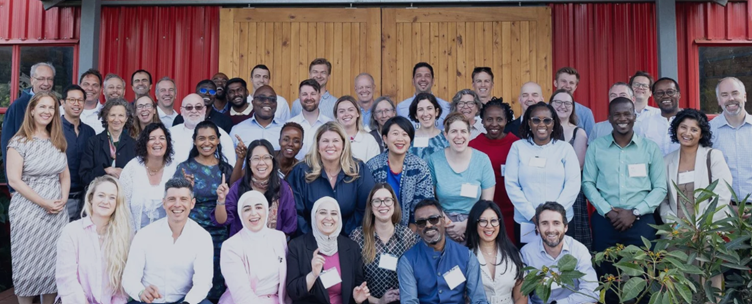
The Global ISA Alliance is a community of ISA providers and other key stakeholders shaping this emerging field. This year’s Global ISA Alliance Convening was held from 9-12 June 2026 in Nairobi, Kenya. It brought together about 80 participants representing 14 education financing providers and 19 other organisations of investors, researchers and advocates. Participants worked to establish shared standards and strengthen institutional capacity for the responsible and sustainable growth of ISAs.
Yageshree Moodley attended the Convening on behalf of the Bertha Centre for Social Innovation and Entrepreneurship at the University of Cape Town as part of an ongoing research collaboration with Chancen International (Kenya), in the framework of the Innovative Financing for Education to Leave No One Behind project with NORRAG. Since 2018, Chancen has provided ISA funding to 11,000 students across Rwanda, Kenya, South Africa and Ghana. Chancen is a founding member of the Global ISA Alliance, and the Chancen Kenya team hosted parts of the Convening in Nairobi.
The first day featured a field visit to one of Chancen Kenya’s partner education institutions, where ISA funding enables youth from low-income households to learn skills and secure apprenticeships in the hospitality sector. Convening participants observed students in both the classroom and practical (kitchen) settings, and attended the graduation ceremony of the previous cohort of students. From speaking with several students, it was apparent that postsecondary training offers at least the hope of improved living standards. It was especially inspiring to hear from two young women, a refugee and an orphan, who saw their studies as a path out of poverty not just for themselves, but for their loved ones.
The second day began with a “global show and tell”, with ISA operators sharing what feels hopeful and challenging in their local contexts. For those that would like to learn more, refer to these case studies covering over 52,000 students with USD 717 million financed across 24 countries. Each organisation has its nuances, although a common challenge was how to connect education to meaningful jobs in a rapidly changing economy.
The afternoon brought the main event of the Convening: unveiling the first shared standards for the field. ISA operators were partnered with other participants representing varying perspectives, to explore the practicalities of this tiered approach to impact reporting – spanning consumer protection, outcomes measurement, and sustainable growth for the sector. The Global ISA Alliance is a membership body for ethical ISA providers, but instead of charging membership fees, it will require member organisations to share data through regular reporting around these Global Standards. This goes beyond self-regulation, to gathering and regularly publishing information that could attract investment and government support for ISAs.
The third day began with workshops on raising and structuring capital, strategic communication and impact measurement infrastructure. The afternoon was dedicated to “peer consultancies”: problem-solving sessions using a structured protocol to draw on the collective expertise in the room. The Bertha Centre was invited to two consultancies: how to scale Wedu, and how to motivate for a research grant to support the development of ISAs.
Overall, the Global ISA Alliance Convening enabled participants to encounter pressing strategic challenges and game-changing opportunities, while appreciating the relevant skillsets and diverse perspectives needed for the sustainable growth of ISAs in global education financing – so that learners everywhere can access tertiary education without unmanageable debt.
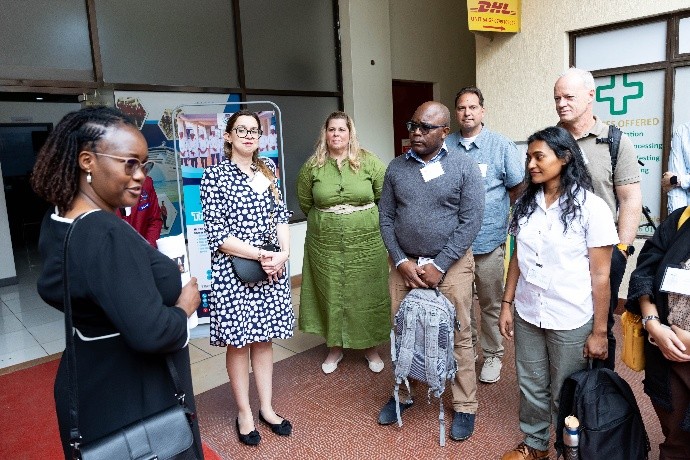
Chancen Kenya team introducing us to one of their education partners

Closing celebration under the Nairobi sky