

Event Highlights: KIX EMAP at CIES 2026
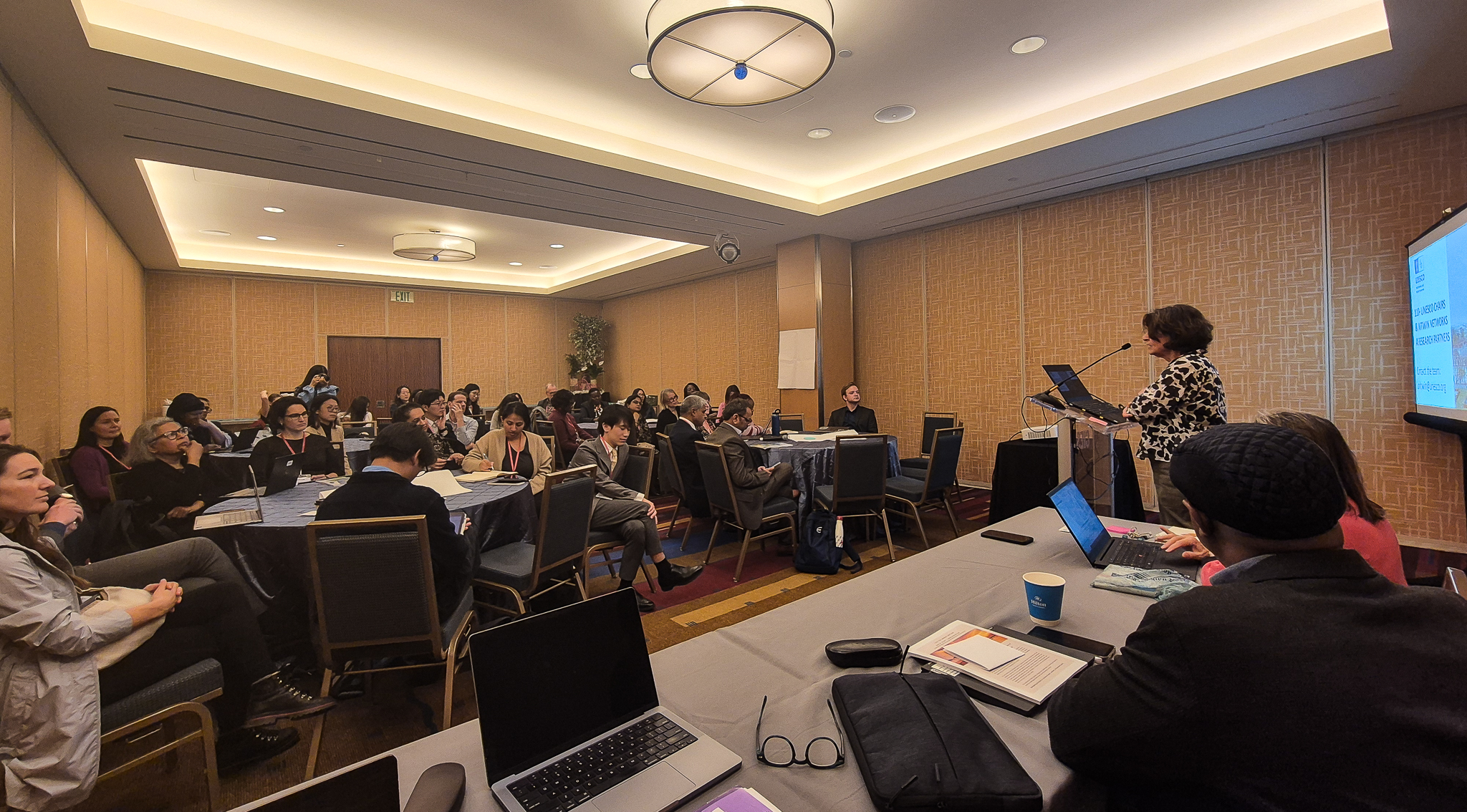
The KIX EMAP Hub participated in the Comparative and International Education Society (CIES) Conference 2026 “Re-examining Education and Peace in a Divided World”, held in San Francisco, United States, on 28 March – 1 April 2026. Across two sessions, representatives from the Hub presented the Hub’s efforts to support knowledge exchange and systemic transformation to strengthen and improve education policies in the EMAP region.
Workshop session: Improving partnerships between governments and researchers. What can be learnt from defining priorities together?
Date: Saturday, 28 March 2026
Time: 11:15 AM – 12:30 PM (PST)
The KIX EMAP Hub contributed to a workshop session on “Improving partnerships between governments and researchers. What can be learnt from defining priorities together?”. Chaired by the Global Education Evidence Advisory Panel (GEEAP), the workshop brought together initiatives working across the evidence‑to‑policy ecosystem, including GPE KIX by the International Development Research Centre (IDRC), the GPE KIX EMAP Hub hosted by NORRAG, EdLabs supported by the Jacobs Foundation, the International Development Research Centre (IDRC), and the UNESCO Chair Programme.
José Luis Canêlhas, KIX EMAP Hub Director, shared learnings from the KIX EMAP Hub’s demand‑driven approach to institutional capacity strengthening, drawn from work across 37 partner countries. The presentation highlighted the importance of working with the “right” institutions beyond central ministries, recognising existing strengths, and supporting peer‑to‑peer learning and exchange across contexts. A central insight was the role of timing and trust—identifying windows of opportunity where research can meaningfully inform policy and adapting engagement as priorities shift. Through interactive breakout discussions, the KIX EMAP engaged participants in reflecting on what success looks like in supporting evidence use, advancing the workshop’s broader framing: that effective government–research partnerships require long‑term relationships, co‑creation, and responsiveness to complex policy realities.
Panel discussion: Uptake of local policy expertise: Factors that improve the utility of policy research
Date: Wednesday, 1 April 2026
Time: 1:15 – 2:30 PM (PST)
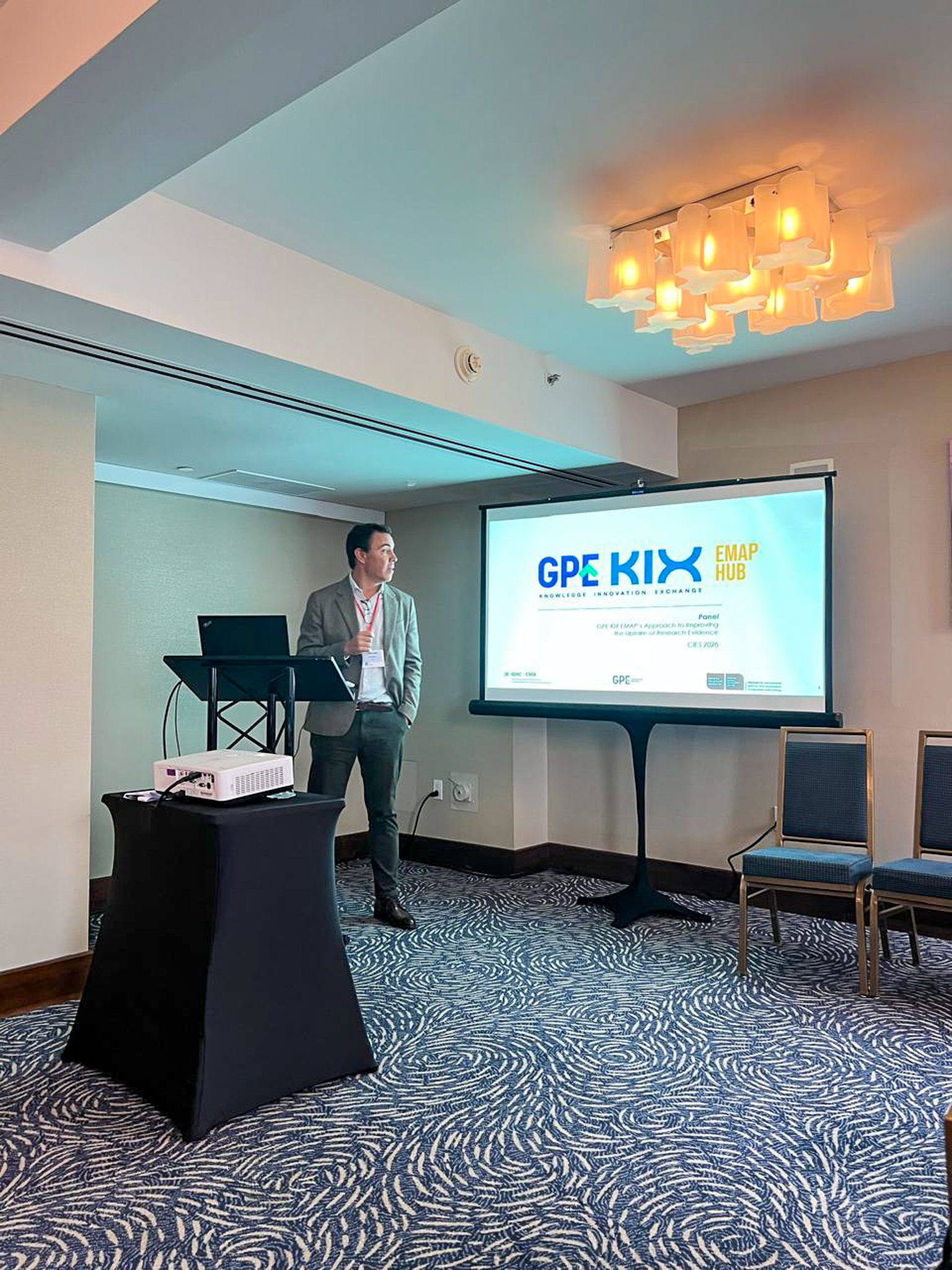
The KIX EMAP Hub convened a panel on “Uptake of local policy expertise: Factors that improve the utility of policy research”, highlighting how locally grounded evidence can inform education policy and practice. The panel was chaired by Gita Steiner‑Khamsi, Lead Researcher for the KIX EMAP Hub, and brought together researchers, policymakers, and practitioners working across the evidence‑to‑policy ecosystem.
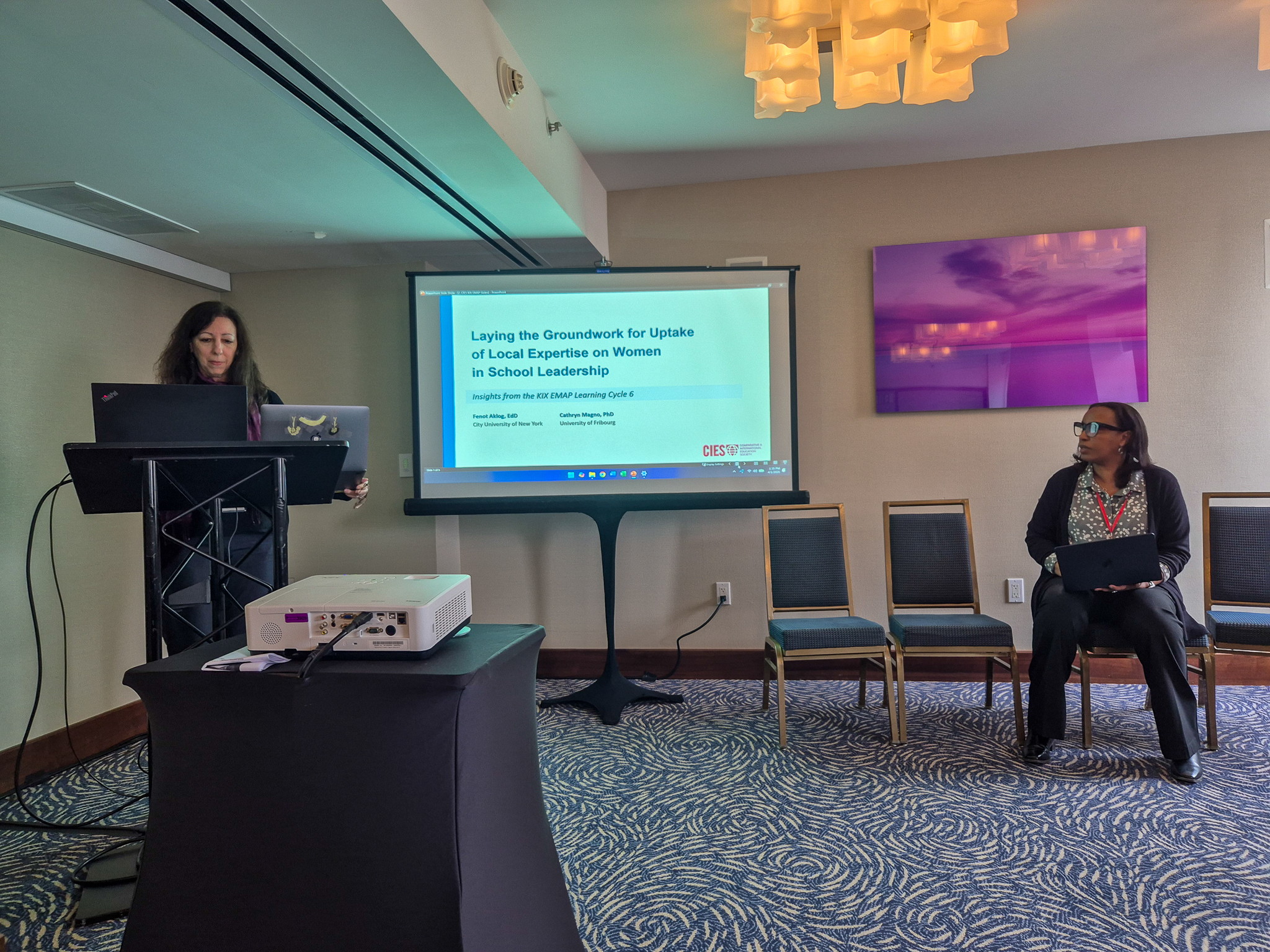
José Luis Canêlhas, KIX EMAP Hub Director, presented the KIX EMAP Hub’s overall approach to improving research uptake, emphasising demand‑driven engagement, co‑production between knowledge producers and users, and the need for institutional pathways that connect research to policy decision‑making. Insights from the Learning Cycle 6 on Increasing Women’s Representation in School Leadership, presented by facilitators Fenot Aklog and Cathryn Magno, illustrated how locally authored policy briefs can surface shared challenges and generate context‑specific, actionable recommendations.
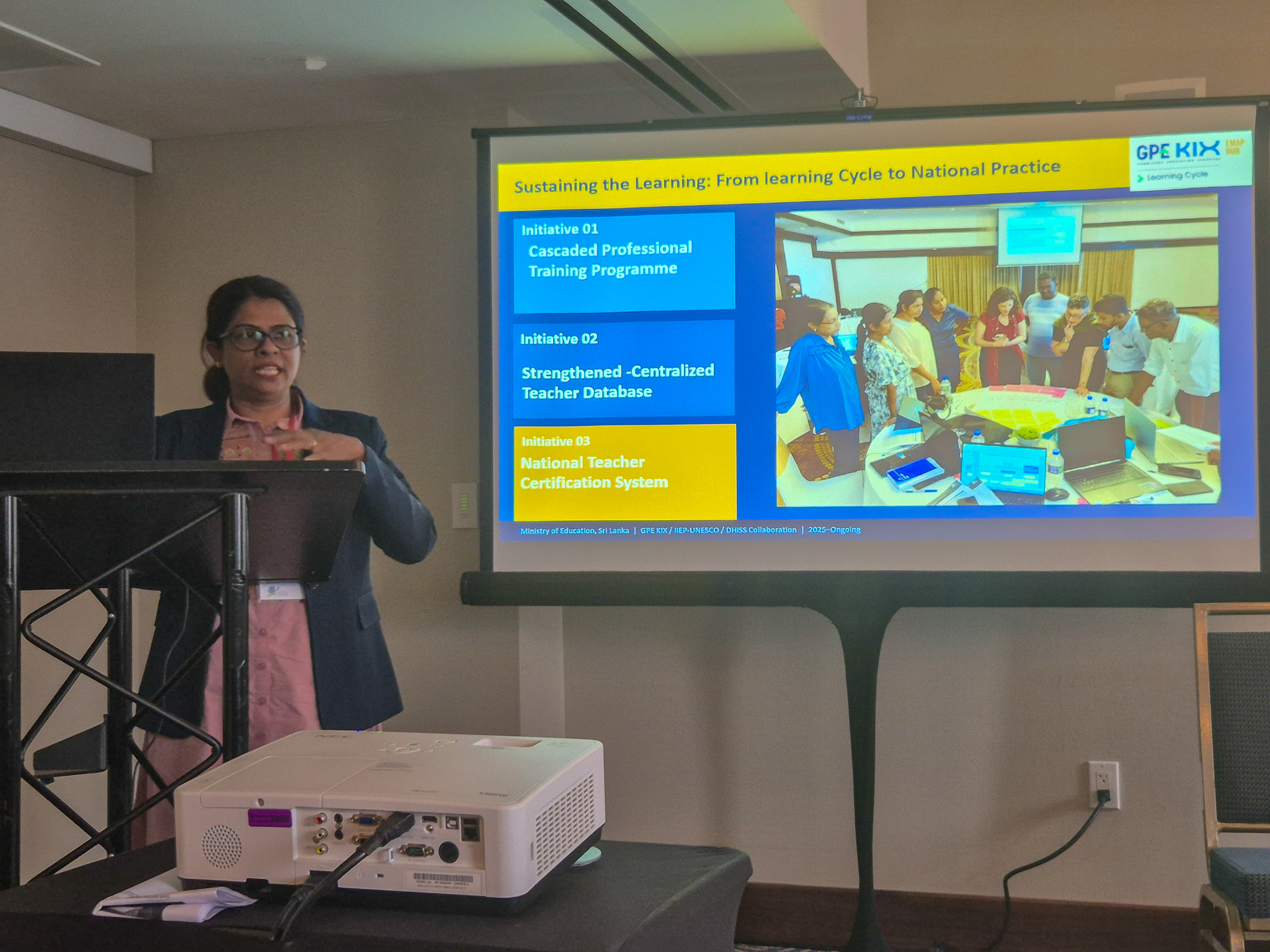
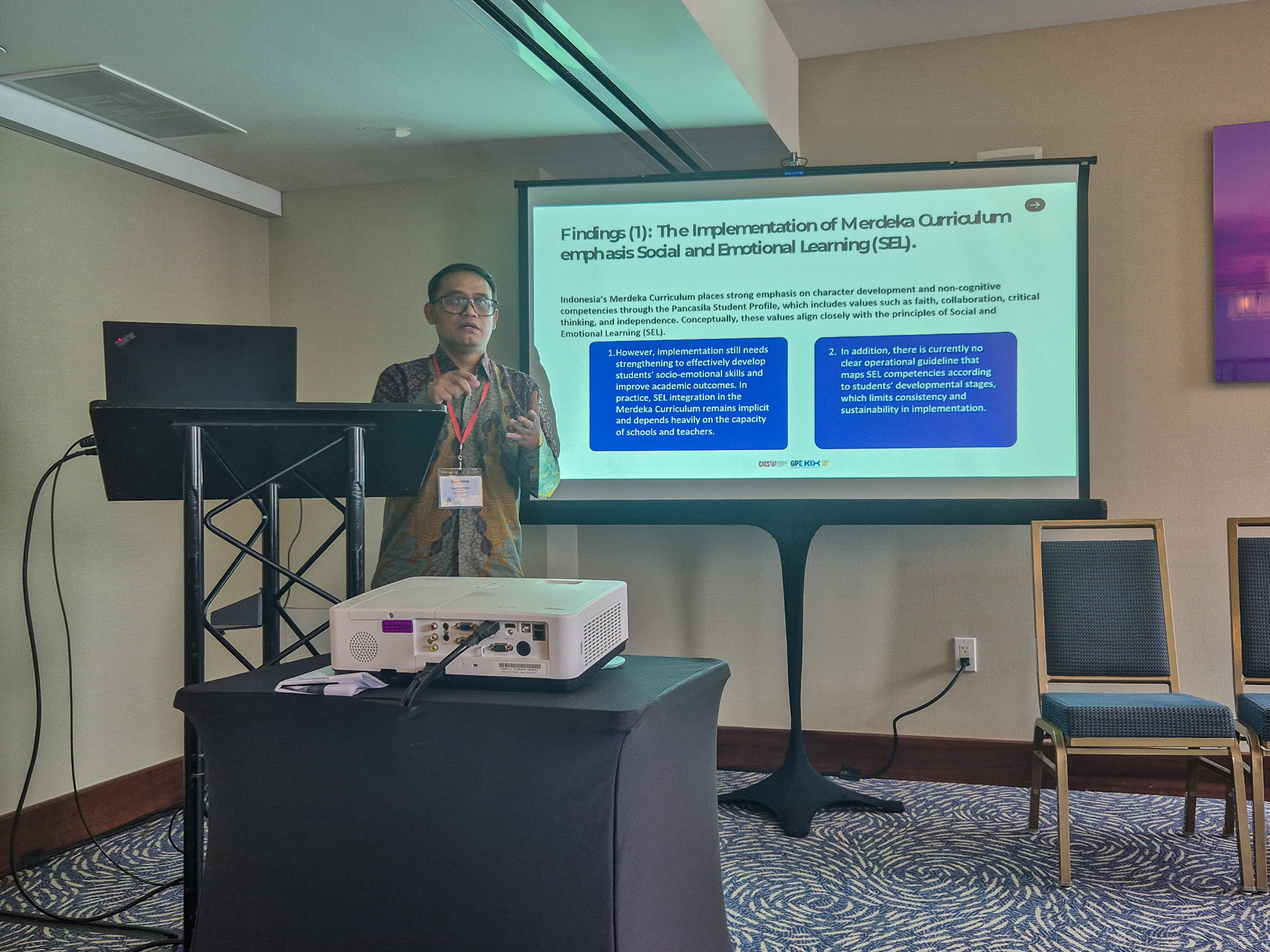
National experiences from Learning Cycle 6 participants further grounded the discussion. Jayani Prishangika showed how evidence generated through a KIX EMAP Learning Cycle informed reforms to secondary teacher workforce management in Sri Lanka, including more transparent, data‑driven approaches to teacher allocation and recruitment. Santoso Hadisucipto presented findings from Indonesia demonstrating how research on social‑emotional learning and tolerance can inform education policy, while also highlighting the limits of evidence uptake in contexts of extreme disadvantage.
Together, the panel reinforced a central message: producing useful policy research requires local expertise, trust‑based relationships, and sustained engagement that bridges research, policy, and practice.