
18 Oct 2024
Event Highlights: Launch of the Arabic Edition of NORRAG Special Issue 08 “he Education-Training-Work Continuums: Pathways to Socio-Professional Inclusion for Youth and Adults”
العربية The Arabic Edition of NSI 08 was launched online on Wednesday 2nd of October 2024. It was prepared by Rasha Sharaf, Professor of International and Comparative Education at Helwan University, Egypt, and Regional Editor of NSI. It includes two articles written by authors located in Egypt, Jordan and Libya in addition to translations of... Read More
18 Oct 2024
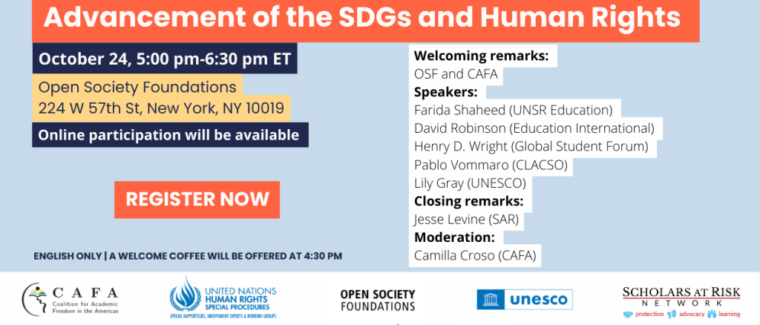
UNSR Education: General Assembly Presentation and a Side Event on Academic Freedoms
On 24 October, we invite you to join us at the Open Society Foundations (OSF) in New York for the event The Right to Academic Freedom and the Advancement of the SDGs and Human Rights: Leveraging sustainable development and human rights, including the right to science, for the people and planet. This event is aimed at reinforcing the... Read More
17 Oct 2024
ECCES 2025 Call for Abstracts
CALL FOR ABSTRACTS The time has finally come: we would like to formally invite you to participate in the inaugural edition of the European Conference on Critical Edtech Studies (ECCES). ECCES will take place June 18-20, 2025, at the Zurich University of Teacher Education – including two confirmed keynote presentations by Felicitas Macgilchrist and Ida... Read More
17 Oct 2024
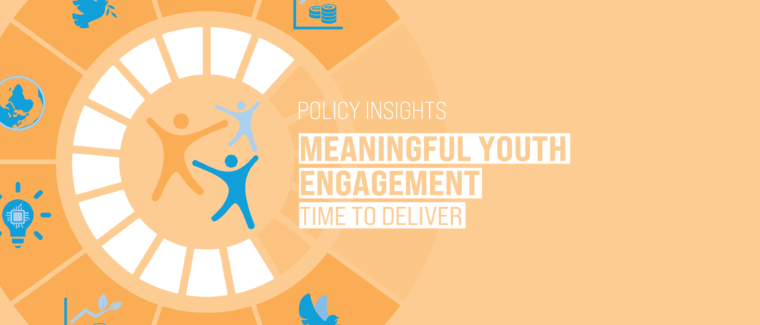
Speech, Power, and Affirmation Strategies for Youth Engagement
In this blog post, Jhonatan Almada argues that youth engagement needs to go beyond manipulation, symbolism, and decoration. He proposes speech, power, and affirmation as effective strategies for youth engagement. This blog post was previously published in NORRAG’s Policy Insights #5, Meaningful Youth Engagement: Time to Deliver, which was launched on the occasion of the... Read More
Webinar Among Teachers : Challenges to the Right to Education from Authoritarian Movements
português Date: Wednesday 23 October 2024 Time: 11pm CET Online (Youtube) Webinar Among Teachers : Challenges to the Right to Education from Authoritarian Movements This webinar is part of a series or regional events organised in partnership with the Federal University of Minas Gerais (Brazil), with the Research Group on Education Policy and Teaching Work... Read More

15 Oct 2024
Shaping Education for Peace: NORRAG’s Contribution to the Framing of the Human Rights Council-Mandated Report
Education is a tool for peace, it is vital to recognize that learning for peace extends beyond classrooms and crises. It is not just for students but also for teachers, administrators, and education systems that must adapt to foster peace in increasingly polarized environments. NORRAG’s contribution to developing guidance for the framing of the Human... Read More

10 Oct 2024
Evidence for Education Policy Reforms: Between Global Agendas and Local Reality
In this blog post, Rasha Sharaf draws on her own experience to contribute to the discussion on the tension between local reality and global agendas in the use of evidence for education policy reforms. In this blogpost, I am sharing my experience with international development projects in the MENA and South Asia regions where I... Read More

09 Oct 2024
Collaboration Café: Finding Pathways for Relevant and Contextual Education Systems Transformation
The Collaboration Café: Finding Pathways for Relevant and Contextual Education Systems, co-hosted by the Brookings Institution Center for Universal Education and the Salzburg Global Seminar, was held on Tuesday, 24 September 2024, in New York City, on the sidelines of the 79th UN General Assembly. The event explored the various dimensions of collaboration in global... Read More
Regional Launches of NSI 10 - Education for Societal Transformation: Alternatives for a Just Future
Regional Launches in April 2026! NSI 10 French Launch – Friday 20 March 2026 NSI 10 Mandarin Launch – Wednesday 15 April 2026 – Online EVENT HIGHLIGHTS NSI 10 Russian Launch – Tuesday 5 May 2026 – Online NSI 10 Spanish Launch – Wednesday 6 May 2026 – Online NSI 10 Arabic Launch – TBD READ NSI... Read More
05 Oct 2024
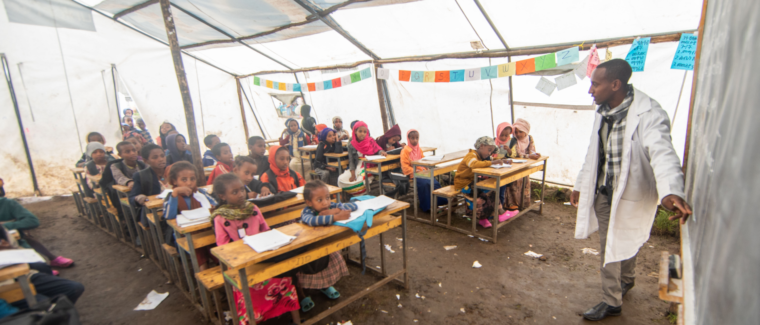
Are Teachers Valued in Education in Emergencies Settings? What We Know and How We Address the Challenges
In this blogpost, Christopher Henderson reflects on an event held on 1 October by NORRAG and the Geneva Global Hub for Education in Emergencies to mark World Teachers’ Day (5 October), highlighting the urgent need for investments in teachers’ work and wellbeing. Sheikh Muhammed pointed around the stifling hot and cramped classroom – with longing... Read More