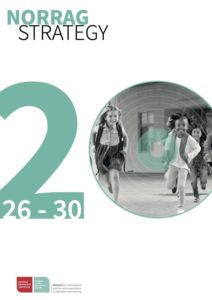
NORRAG STRATEGY
NORRAG’s Strategy (2026-2030) works toward our vision of a world in which everyone enjoys the right to equitable, quality, accessible and relevant lifelong education as a public and common good. In a rapidly shifting global landscape, NORRAG serves as a navigator—connecting evidence, actors and ideas to strengthen education’s role in shaping new futures. As challenges grow to multilateralism and solidarity, freedoms to learn, teach, research and communicate, peace, planetary health and sustainable prosperity, and the respect for and the utilisation of traditionally marginalised expertise, knowledge and priorities, NORRAG sees education as a systemic response: one that is localised, historicised and contextually relevant, evidence-informed and available to all.
NORRAG’s distinctive approach is to work at the interstices of knowledge, policy and practice. We surface and amplify marginalised expertise and experts from under-represented groups; co-produce, mobilise and disseminate contextually relevant knowledge; facilitate policy dialogue; and share capacity to collect, interpret and use data and evidence. In 2026-2030, we apply this approach across four thematic priority areas: Data, Evidence and Knowledge; Education for People, Planet, Peace and Prosperity; Innovations and Disruptions; and Education Finance. A fifth set of transversal activities concerns ensuring NORRAG’s institutional sustainability.