


Who Gets to Know? Reflections from a Sri Lankan School Leader
In this blog post, Devika Alldis examines teachers’ work conditions and agency in top-down policy environments and advocates for sustainable, professional workloads and recognition.
After nearly four decades in education in Sri Lanka — around ten years in national schools and 28 years in international schools, including 18 years as principal of my current school — I have had the privilege of walking alongside generations of teachers, witnessing their struggles, their quiet dedication, and their unwavering commitment to children, and I have seen the teaching profession change considerably.
Curricula have changed. Technology has changed. Expectations of schools and teachers have increased. International qualifications and professional standards have become more visible. Yet behind all these developments remains the person who ultimately makes education meaningful for a child: the teacher.
This has led me to reflect on a simple question: How well do those shaping education policy understand the teacher who is expected to make that policy work?
Policies may be developed nationally or internationally, but eventually they reach a classroom. There, a teacher has to interpret them, make them meaningful and respond to the children sitting in front of them.
For this reason, I believe discussions about quality education need to pay greater attention to how teachers are recruited, prepared, developed, valued and retained.
In my experience as a school leader, I increasingly encounter young graduates with good academic qualifications who still require professional preparation for teaching.
A degree provides important subject knowledge, but knowing a subject and knowing how to teach it are not the same. Teaching requires pedagogy: understanding how children learn, recognising when a student has not understood, adapting explanations, assessing progress and responding to different abilities and needs.
Schools therefore often take considerable responsibility for developing teachers after recruitment through induction, mentoring, classroom observation and continuing professional development.
But teacher development must go beyond technical competence. It must also build professional identity.
Professional identity needs policy support
Professional identity is about more than being qualified to teach. It is about how teachers see themselves: their responsibility towards children, their commitment to the profession, the values that guide their work, and their sense of belonging to the school and community they serve.
This identity does not develop through technical training alone. It is shaped through mentoring, experience, professional relationships and the culture in which the school is embedded. In Sri Lanka, teachers work with children whose lives are closely connected to families, communities and cultural values. Teacher preparation therefore needs to develop not only the ability to deliver a curriculum, but also an understanding of the social and cultural responsibility of being a teacher.
Fair salaries matter. Working conditions matter. Professional respect matters. Career pathways matter. Opportunities for continuing learning matter. Together, these factors shape how teachers see themselves, whether they feel they belong to the profession, and whether they are able to remain and grow within it. When this support is weak or inconsistent, even committed teachers may find it difficult to sustain long-term engagement with the profession, regardless of their dedication to children.
Yet professional identity is not built through these supports alone. It also requires a genuine commitment to children and a sense of purpose in teaching.
This is why policy needs to work from both directions: developing teachers’ competence, values and professional commitment, while also ensuring fair remuneration, supportive working conditions and professional recognition that make teaching a respected profession in which good teachers want to remain.
A strong teaching profession needs teachers who care about children, and a system that demonstrates that it cares about teachers.
Developing teachers — and keeping them
Retention has become an increasingly important concern from my perspective as a school leader. Teachers may move from one school to another in search of better salaries or working conditions. Others develop experience with international curricula and qualifications in Sri Lanka and later pursue teaching opportunities overseas.
Teachers should not be blamed for wanting to improve their lives or seek new professional opportunities. But there is another side to this movement that deserves attention.
A school may recruit a graduate, provide induction, invest in training and mentoring, and support that person until they become a confident teacher. When the teacher leaves, much of that process has to begin again.
For students, repeated teacher turnover can affect continuity. For experienced staff and school leaders, it means repeatedly investing time in recruiting, inducting and developing new colleagues.
In the Global South, there is also a wider concern. When countries and schools invest in developing teachers whose skills later become attractive internationally, we need to think not only about teacher mobility but also about the sustainability of the systems from which those teachers move.
Teacher policy therefore cannot focus only on recruitment. It must also ask what makes good teachers want to stay.
Mentoring should be part of teacher policy
From my experience, mentoring is one of the most valuable ways in which a new teacher develops. An experienced teacher can provide something that a short course cannot always offer: sustained guidance within the reality of everyday teaching.
A mentor can observe a lesson, help a young teacher reflect on what worked and what did not, suggest another approach and provide reassurance during the difficult early years of the profession. Yet mentoring is often treated as an additional responsibility undertaken by experienced teachers alongside their existing workload.
If we believe mentoring strengthens the profession, it should be recognised more clearly.
Experienced teachers who develop younger colleagues should be given appropriate time, professional recognition and opportunities for advancement. Where possible, this contribution should also be reflected in remuneration.
Developing another teacher is not an informal favour. It is professional work that helps sustain the quality of the entire school.
Global policy ultimately reaches a local teacher
The importance of the teacher becomes even clearer when education crosses national boundaries. In Sri Lankan international schools, teachers may work with internationally developed curricula, qualifications and educational expectations. Yet, in my professional context, the overwhelming majority of students are Sri Lankan, growing up within Sri Lankan families, communities and cultures.
The curriculum may be international, but the classroom is local.
The teacher therefore has to do more than deliver content. The teacher connects global expectations with the cultural and social realities of the children in front of them. This is one reason why teachers should not be seen simply as the final implementers of policy.
They interpret policy. They adapt it. They make professional judgements about how it can work within their particular context. That experience is also a form of knowledge.
Who gets to know?
Education policy frequently travels towards teachers.
New curricula arrive. New assessment expectations arrive. New technologies arrive. New professional standards arrive.
Teachers are expected to make them work.
But knowledge should also travel in the other direction.
Teachers know what happens when policy reaches a classroom. They know what students struggle with. They understand their communities. They know where an idea works well and where it requires adaptation. They also understand the everyday realities of entering, developing and remaining within the profession.
If the South also knows, teachers in the Global South should not be viewed only as the final implementers of educational ideas developed elsewhere. If the Global South is to contribute more fully to global education conversations, then the experience of its teachers and school leaders should be part of those conversations too.
Perhaps we therefore need to ask not only what teachers are expected to do for educational reform, but what educational policy needs to do for teachers. How do we prepare teachers for the realities of the classroom? How do we develop both professional competence and professional identity? How do we recognise mentors, create meaningful career pathways and retain capable teachers? And how do we ensure that teachers’ own knowledge and experience help shape the policies that affect their work?
Perhaps the question for global education is not only what teachers must do to make policy work. It is also: What must policy do to help good teachers enter the profession, grow within it, and want to remain?
Author bio
Devika Alldis is a Sri Lankan school leader with nearly four decades of experience in national and international education, including 18 years as a principal in the international-school sector. She holds a PhD from the University of Nottingham.
Contact: devikaalldis@gmail.com
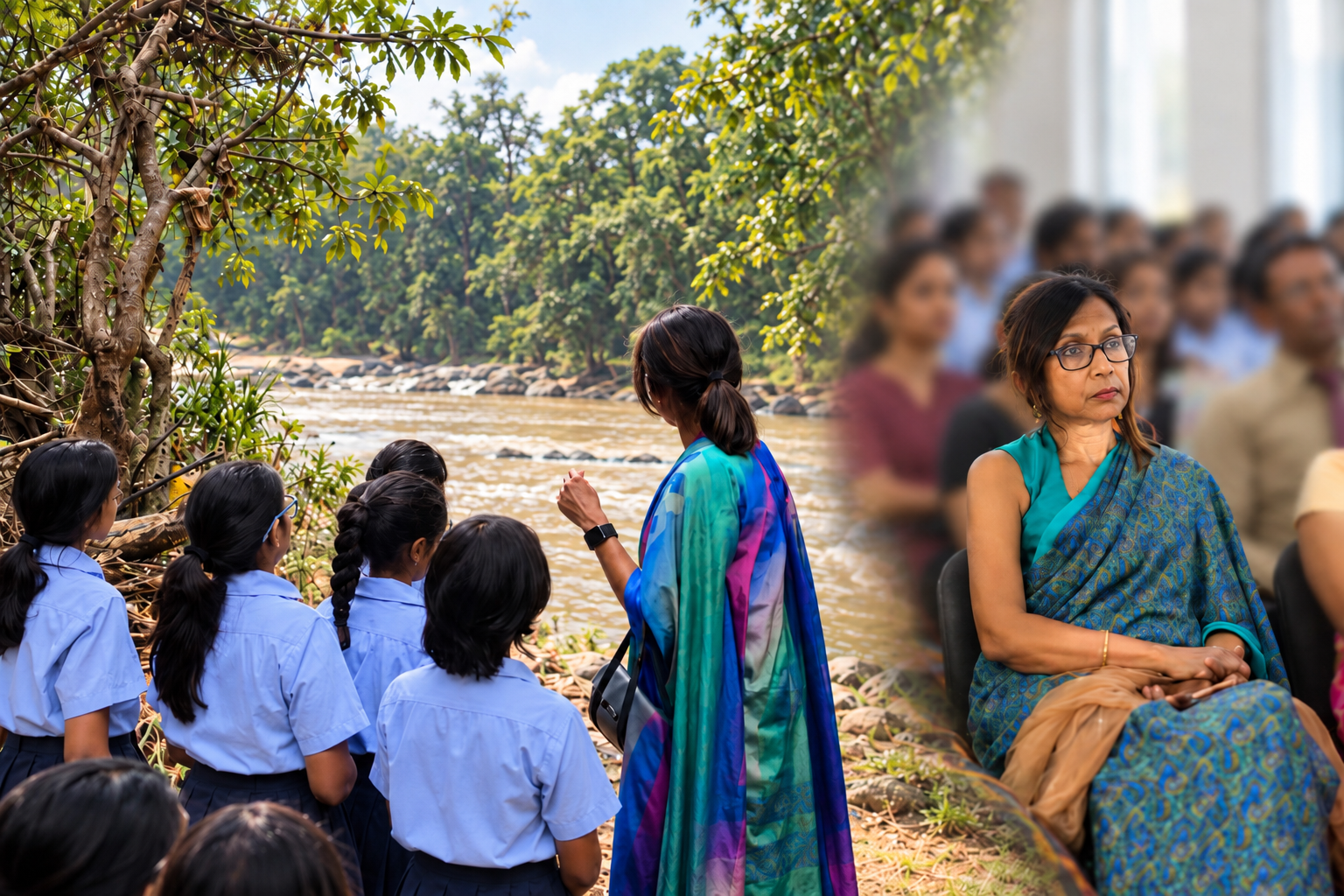
Image Credit: OpenAI. (2026). ChatGPT (AI-assisted image editing tool). Image based on an original photographs from the author’s personal collection; background figures were selectively blurred for privacy.