

Clear Goals, Weak Pathways: What Zambian Secondary School Students’ Aspiration Data Tells Us About the Career Guidance Systems Meant to Support Them
In this week’s blog post, Fay Hodza and Alessandro Kosak examine support and skills for aspirational young Zambian school leavers to shape and realise their own future ambitions.
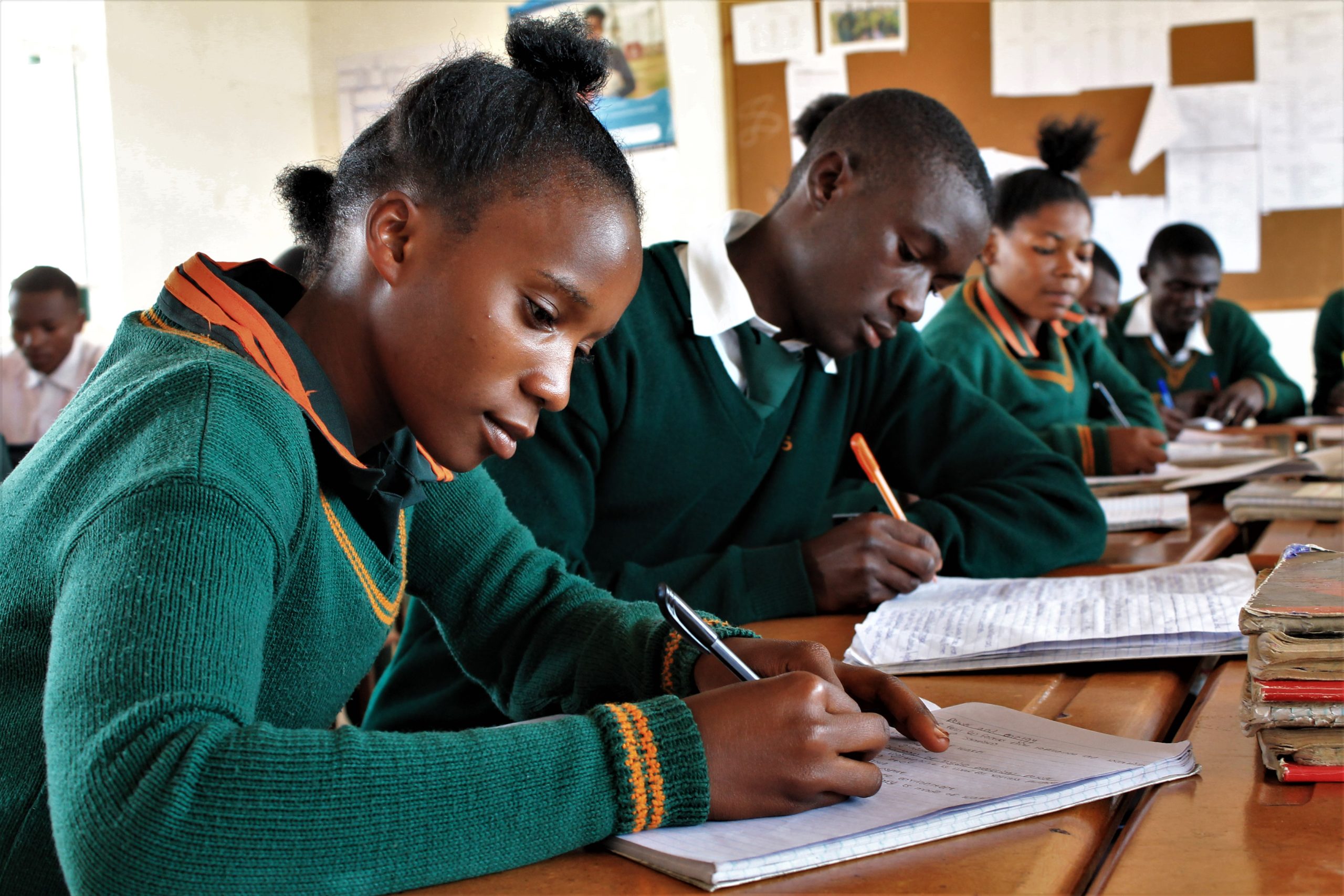
When secondary students in Zambia were asked as part of a recent PEAS baseline evaluation (2026) what they planned to do after school, the answers were specific. 57% of students intended to establish a business and 57% intended to pursue university study with many selecting both, reflecting an openness to multiple pathways rather than a single route. The crucial part was that the majority could describe the steps required to reach their goals, showing notable clarity in their futures. Yet the same baseline evaluation data also found that careers guidance is fragmented, and that students often lack the practical skills needed to act on the post-school plans they have already made. This blog examines what student aspirations look like, where the systems supporting them fall short, and what the data suggests support systems can do to begin to close that gap.
Students already have clear, pathway-oriented plans
Looking at the data around aspiration from the baseline, career goals not only exist, but they are specific and structurally understood. Rather than lofty ambitions described in abstract terms, students regularly identified concrete professions whilst outlining the progression routes and the constraints they are likely to face. 84% anticipated that financial barriers will be their most significant challenge following graduation, with a further 43% citing a lack of connections or networks to find jobs and opportunities. On the financial side, the report points to how those pressures are met: 84% of students name family and relatives as their primary source of income, against just 0.1% from formal wages. Guidance that speaks only to individual planning will miss the collective, family-based mechanisms students and their households already rely on. The 43% citing lack of connections or networks, can be contextualised against another statistic: 73% of students already know someone personally who holds the job they aspire to. Thus, the gap may lie less in an absence of networks than in the limited, structured opportunities students have to draw on the social capital that already runs through extended family, church and community. Schools cannot create these networks, but they can play a bridging role, for example by inviting those same community members into career talks or mentoring, or by helping students make purposeful use of contacts they already have. .
The patterns are consistent across school types, pointing to aspirations that are not simply an artefact of PEAS schools’ particular environment but reflect a broader orientation among secondary school learners in the sample. The challenge is whether the systems around them – schools among them, but also labour markets, community structures and economic opportunity are equipped to meet their aspirations with something structurally sufficient and appropriate for their contexts. Thus, schools must be able to organise careers guidance and skills development that is contextually relevant to both students ambitions and their future pathways.
Career guidance is widely accessed but unevenly structured
Across the sample, we found that access to career guidance is high, with 91% of students in PEAS schools and 87% in PEAS-Government partner schools reporting having received some form of career guidance. However, access and quality are not equivalent. The primary source of guidance across contexts is classroom teachers, cited by 72% of students. What the qualitative data demonstrates is a significant difference in how that guidance is organised.
In PEAS schools, the data describes structured inputs such as career talks, university visits and career days, suggesting that there is some degree of institutional design behind guidance delivery. In PEAS-partner and non-PEAS schools, the picture is more inconsistent: guidance is described as “sporadic”, reliant on the “goodwill of individual teachers” and dependent on “occasional visits from external partners”. The baseline report notes the absence of “sustained, curriculum-integrated programmes” – a gap that indicates students are being exposed to information and opportunity, but not to the sustained, practical support to navigate pathways with confidence.
This distinction is crucial. Career guidance that functions on individual initiative rather than institutional structures produces uneven outcomes. Teachers are often at capacity with the wide number of roles they have to perform and overwhelming student to teacher ratios, so adding career guidance without the proper support will not be adequate in meeting the needs of students. Where students already understand the steps required to reach their goals, what they often lack is help with execution: how to access information, how to navigate application processes, how to prepare for the practical realities of transition. Guidance that is occasional and informal does not reliably provide this, regardless of how frequently students technically report receiving it.
Aspirations outpace readiness in practical skills
Alongside the gap in guidance structure, the data points to a specific skills mismatch. Students report high confidence in foundational academic and interpersonal capabilities: writing clearly (81%), working in a team (81%), analytical thinking (72%). These are skills that reflect a student body that arrives at the point of graduation with important and transferrable strengths.
However, practical and technical skills tell a different story. Only 30% of students rate their digital skills as ‘good’ or ‘very good’, and amongst the 57% who aspire to establish a business in the immediate post-school period, confidence in business registration and formalisation processes is reported as low. Students understand the goal and have the instinct to pursue it but lack the access to the practical skills that would make that first step manageable.
Students are reaching for goals for which secondary education is only now starting to catch up in providing the necessary skills to realise them. What we see is that the entrepreneurial intent and the communal/relational support is there, but the gap is in the systems around them.
Building systems to match student ambition
The picture that emerges from the data shows students that have clear goals but are having to manage the tension between what they want and what feels immediately achievable. The data points to a structural gap: skills development that does not keep pace with students’ post-school plans, and limited support for the practical steps that sit between aspiration and action. For organisations working in this space, the implication is that careers support needs to be institutionally embedded rather than reliant on individual initiative. That embedding should also speak to how families actually fund and support transitions; extended-family contributions, and church or community support, rather than assuming an individual financial-planning model most students will not recognise. At PEAS, we recognise the potential of Zambia’s Competency Based Curriculum, whose very purpose is to pull education away from a narrow academic inheritance towards the competencies and digital, practical and entrepreneurial skills that match how Zambians make a living. In principle, it speaks directly to the gaps this evaluation identifies. However, a curriculum is only as effective as its implementation: realising its intent will depend on teachers having the training, time and pedagogical support to teach practical, digital and entrepreneurial competencies, an area this baseline did not assess and which warrants further evidence. The post-school transition for students is a measure of a successful education system; continuing to share learnings with the wider sector and working together to realise the ambitions of students is crucial.
Author Bios
Fay Hodza is the Chief Programme Officer for PEAS with over 22 years of experience in education and leadership across the African continent. Fay is a passionate advocate for quality, equitable education and is widely respected for his work in leading teaching and learning and forging pan-African education partnerships.
Alessandro Kosak is an Education and Impact Associate for PEAS with an education background in Development and Humanitarianism.