

Event Highlight:70th Annual Conference of the Comparative and International Education Society
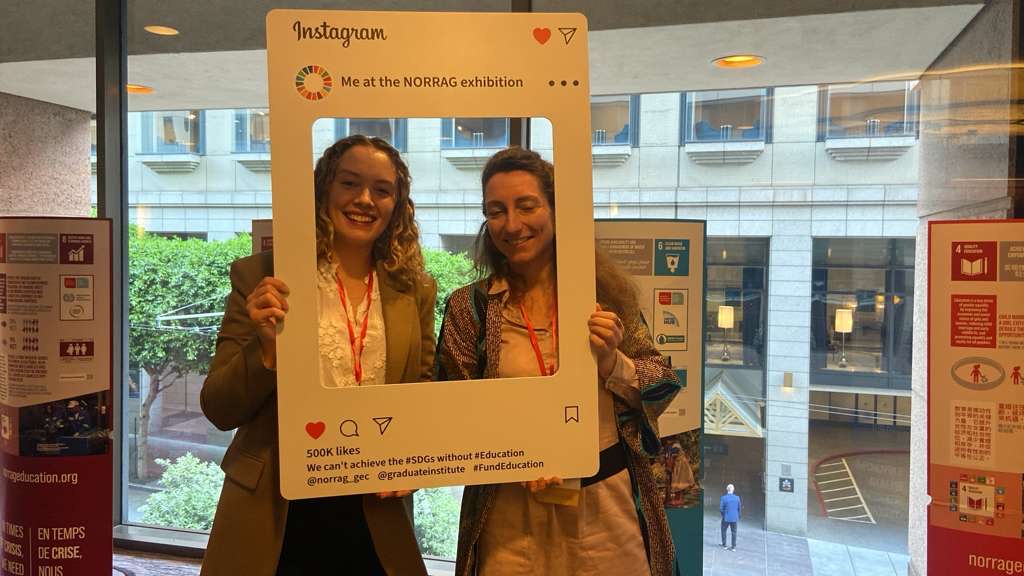
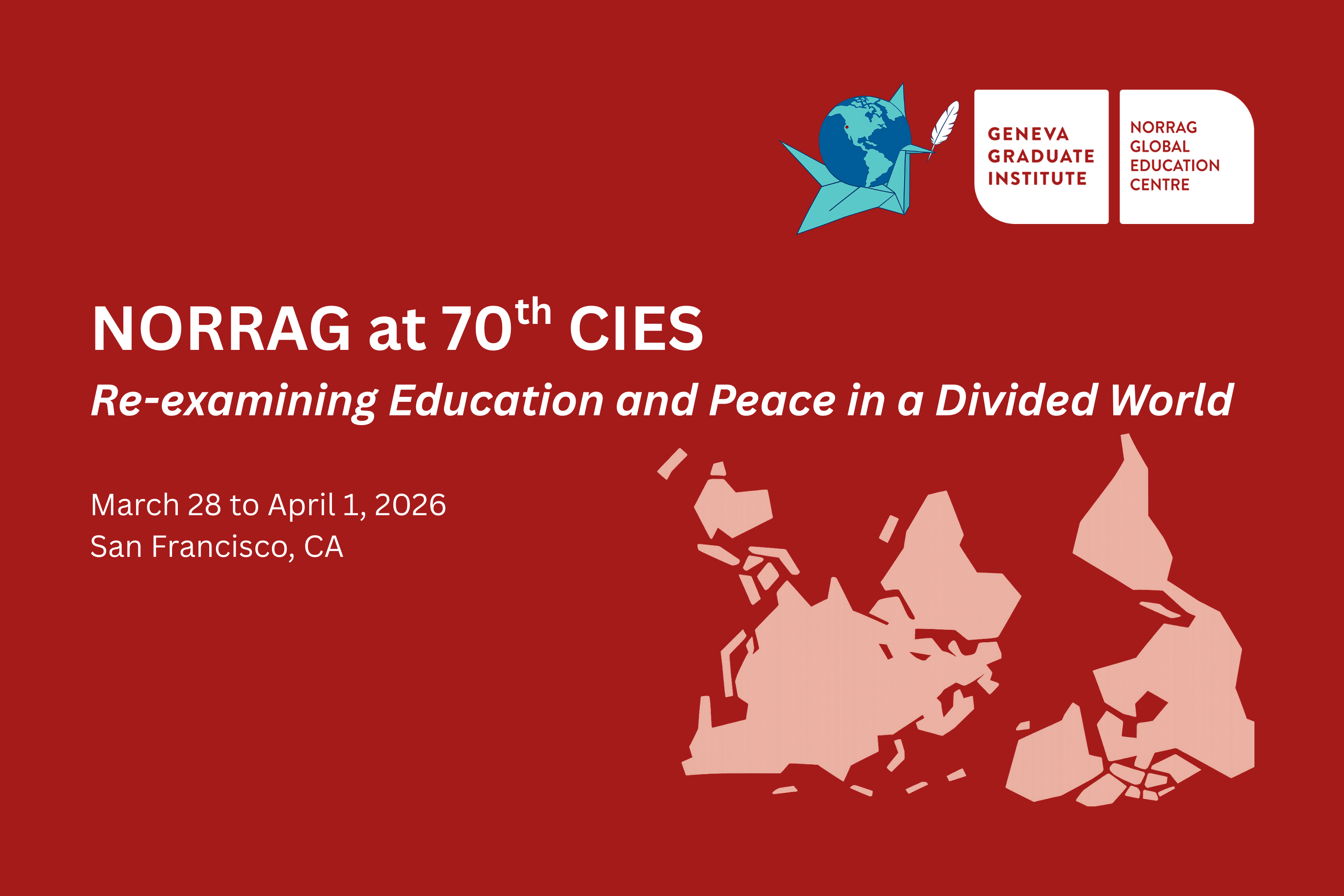
NORRAG participated in the 70th Annual Conference of the Comparative and International Education Society (CIES) in San Francisco from March 28 to April 1, 2026.
Under the theme “Re-examining Education and Peace in a Divided World,” the conference invited critical reflection on one of the most enduring missions of comparative and international education: the role of education in building peace, social cohesion, and justice.
NORRAG’s participation reflects our ongoing commitment to strengthening the connections between research, policy, and practice in education and development. Our network members presented research, engaged in dialogue, and shared insights on education systems strengthening, conflict-sensitive education, teacher development, and the humanitarian-development-peace nexus.
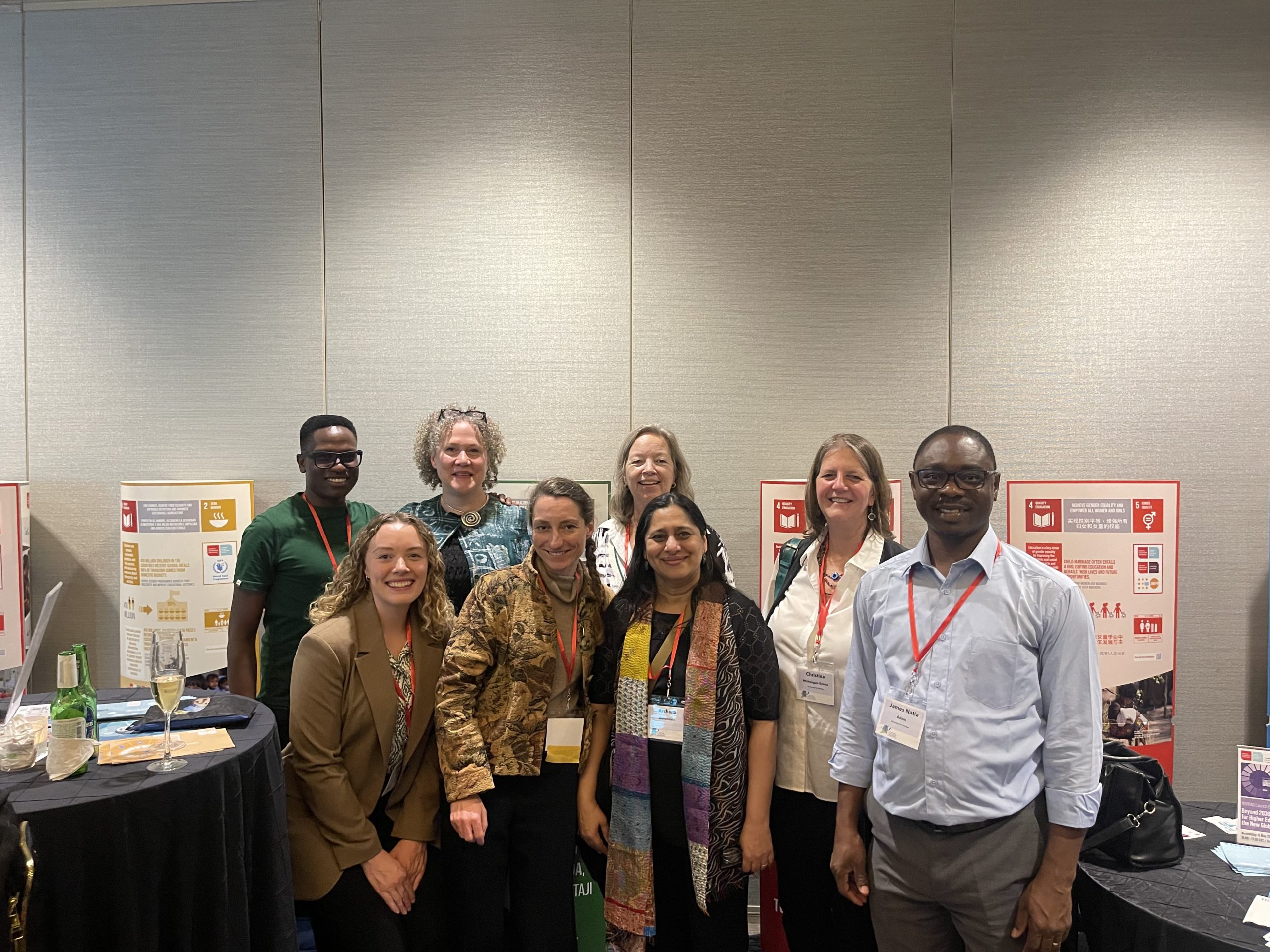
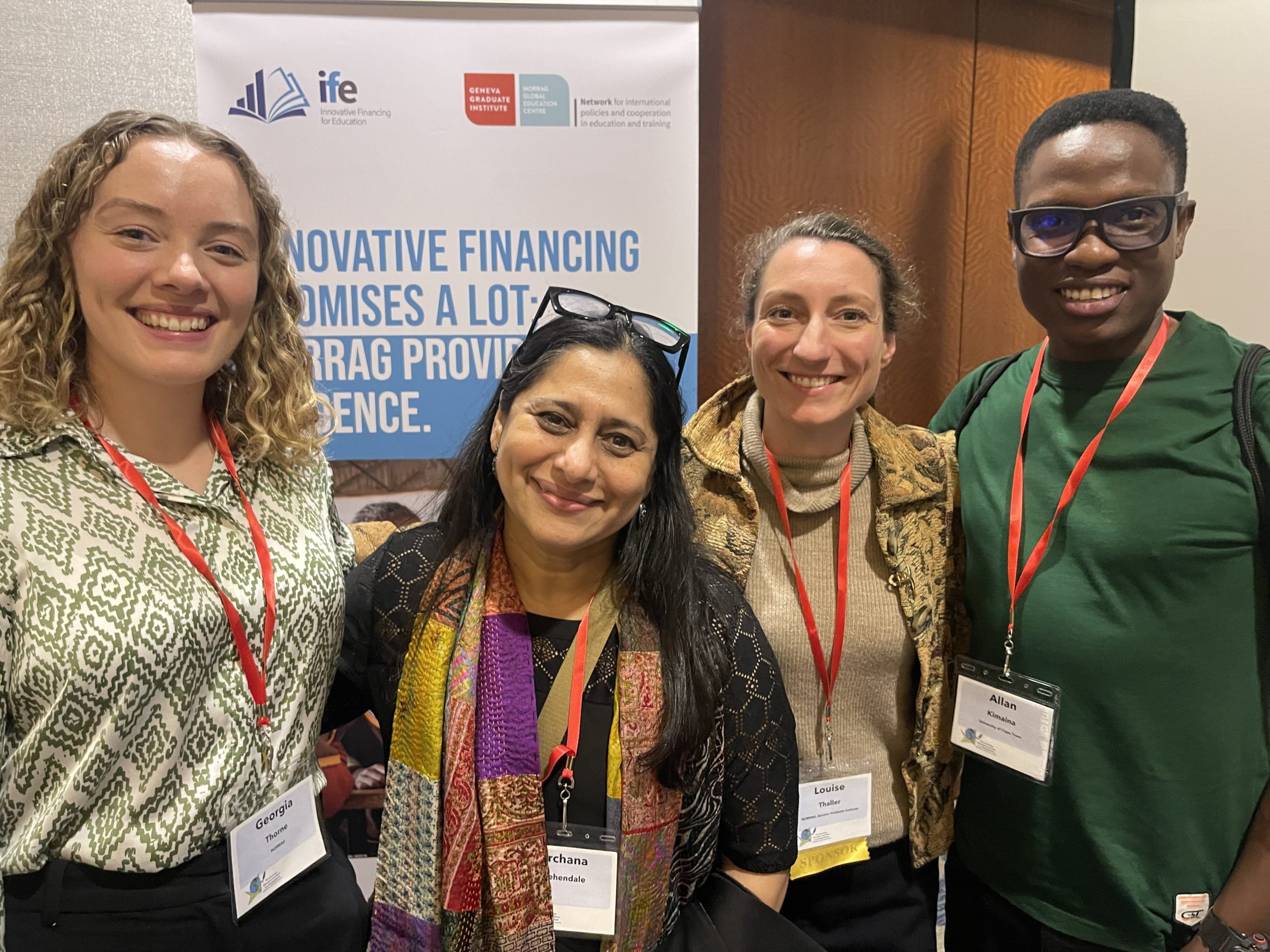
NORRAG and GPE-KIX IDRC Reception
We held another highly successful reception this year, alongside our partner in GPE-KIX, Hamidou Boukary, Senior Program Specialist, GPE-KIX at the IDRC. Moira Faul, NORRAG’s Executive Director spoke briefly:
Everyone is facing grave difficulties in the context of wars and funding cuts, to say nothing of the polycrises we were talking about last year and the year before. This is not a bug; it is a feature.
Hannah Arendt knew this in the 1950s – sometimes I think some people have taken Arendt and Gramsci not as cautionary tales, but rather as a playbook. They knew, and we know that despair is the gateway to inaction. So we are here to offer one—insufficient, but necessary—outlet for action.
We see NORRAG as a platform where experts—all of you!—who are doing impactful and important work can tell the whole world about it, beyond your immediate audiences. And I’m very proud to stand here and tell you that we collectively, as the NORRAG network in 2025 had:
- over 12,000 participants in our online and in-person activities in 2025
- 15,000 downloads of our online publications just last year
- 300,000 views of our blog
- 30,000 lifetime downloads of our books since the series began in 2018
- Surpassed 7,000 network members across 180 countries
We are holding to our principles of knowledge equity, for example publishing a policy insights collection on AI in which 70% of the contributing experts are women, 40% are from the Global South and 40% are non-white – I repeat on AI
Nevertheless, we all know that numbers aren’t enough. We need to also hear the thick description, get a feel for why people come to our events, contribute to or read our publications. So if you like what we do then we’d truly appreciate it if you could email a couple of sentences to whomever you know in NORRAG, or to norrag@graduateinstitute.ch, just telling us what you like, how it helps you when you use or contribute to our outputs. And what we can do to improve, of course!
Innovative Financing for Education: Design Choices and Their Consequences for Results
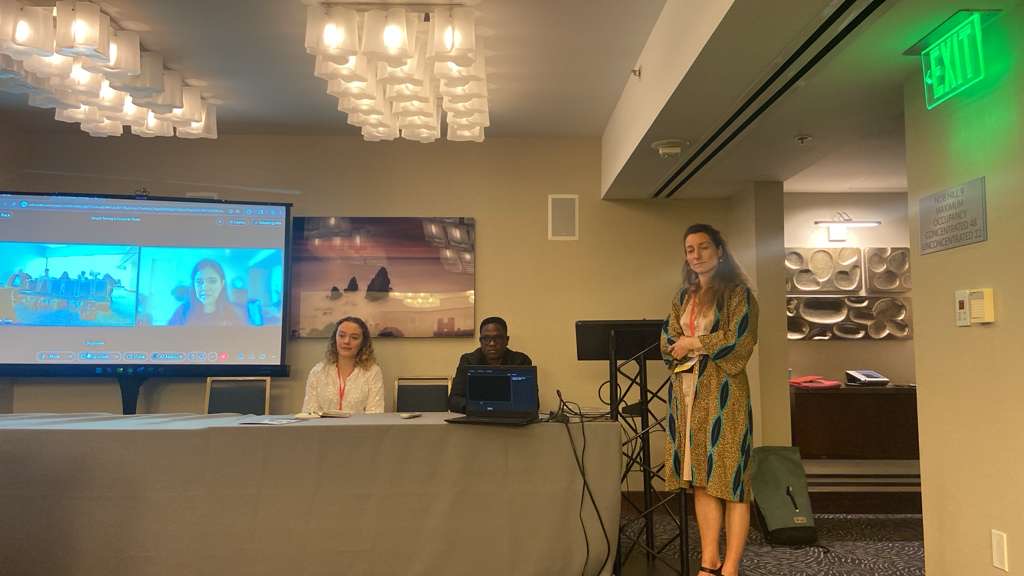
In a context where innovative finance for education (IFE) is often presented as a means of mobilising much-needed additional resources and enhancing efficiency through private sector participation, NORRAG convened a panel of researchers to examine how the unique designs behind IFE contribute to addressing specific educational challenges. The discussion featured recent research produced under the IFE-2-Leave No One Behind project that systematically analyses how such instruments are structured and how their design choices shape education outcomes.
The panel underscored that financial instruments such as impact bonds and student lending schemes embed particular assumptions about what constitutes “results,” how these are measured, and how risks and incentives are allocated among stakeholders. These design features influence which outcomes are pursued, how financial risks are shared between stakeholders involved, and who benefits from the education intervention.
Georgia Thorne’s presentation examined the targeted results used in education impact bonds (EIBs). She presented findings from a recently published paper, “Education Impact Bonds: Picking Low-Hanging Fruit or Reaching for the Stars”, which identified that EIBs often prioritise harder-to-achieve targeted results—particularly related to learning outcomes—rather than focusing solely on easily achievable output indicators. It also shows that most EIBs tie the disbursement of outcome payments to micro-level results achieved, i.e., outcomes for students, trainees, and their caregivers.
In a second presentation, Arushi Terway explained that in EIBs, contrary to common assumptions, financial risk is not fully transferred to private investors. Instead, contractual and structural design features frequently limit investor risk. These findings will be published in an upcoming research paper.
Thirdly, Allan Kimaina presented the paper “Who Gets in and Who’s Left Out? Determinants of Selection in a Social Lending Scheme for Higher Education in Kenya”. He explained the beneficiary selection process and outcomes in the Lending for Education in Africa Partnership, a non-collateral student loan programme in Kenya, designed to expand access to higher education for students from lower-income backgrounds. Its quantitative analysis revealed patterns consistent with a strategic balancing of inclusion objectives and repayment viability, whereby markers of low socioeconomic resources were found less statistically significant than indicators of a successful transition into the labour market in the selection of beneficiaries.
EFN session Panel: Financing Education for Social Cohesion: Blended Finance Approaches in Emerging Economies
This panel, organised by the Education Finance Network, examined how blended finance approaches in education – particularly outcomes-based financing and development impact bonds – are being used to strengthen education systems and promote social cohesion in low-income contexts.
NORRAG’s contribution provided both an introductory framing of blended finance instruments in education, explaining how they operate in practice, and insights drawn from recent research on the Impact-Linked Fund for Education (ILF for Education).
Arushi Terway outlined the underlying logic of blended finance, highlighting how concessional capital from governments and philanthropic sources can be used to mobilise private investment and thereby expand overall financing for education.
Building on this, Archana Mehendale presented insights from recent research on the ILF for Education, which offers three different innovative financing approaches (social impact incentives, impact-linked loans, and impact-linked payments) to organisations providing inclusive and equitable education for vulnerable children and youth in the Middle East and Africa. She illustrated how the use of contribution analysis as a methodological framework can capture the internal mechanisms of different blended finance instruments.
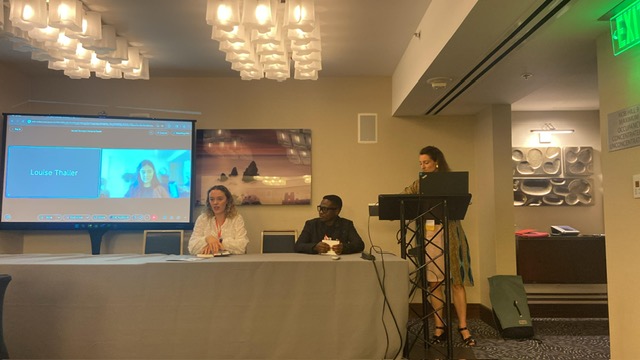
Panel overview – Alison Joyner, with abstract below
In conflict and displacement-affected contexts teachers are at once nation-builders (Falk, 2023; Henderson, 2025), peacemakers (Halai and Durrani, 2017; Novelli et al., 2017; Sayed and Novelli, 2016;) and targets of attack due to their perceived roles as government functionaries, members of unions, or associates of political resistance groups in divided and fragile settings (FECODE, 2021; Marchais et al., 2024). At the confluence of such realities, teachers are agents of change and victims of violence where the struggle to enact personal and collective aspirations are constrained or enabled by the cultural and political economies in which they work (Brandt and Lopes Cardozo, 2023; Pherali et al., 2020; Marchais et al., 2024).
Focusing on one of the more opaque yet consequential concepts in teacher well-being and professional development research (Adebayo, 2019), this panel reflects on the ways in which teacher agency is conceptualized and how, if at all, it is realized in conflict- and displacement-affected contexts. Teacher agency can be understood as teachers’ capacity to act with professional autonomy and purpose, encompassing their ability to make pedagogical and organizational decisions, navigate systemic constraints, and influence educational outcomes for children and their communities (Beista, et al., 2015; Fernet et al., 2008; Mansfield et al., 2016; Priestley et al., 2021).
We are motivated by a dearth of relevant literature on teacher agency in conflict- and displacement-affected settings. To date, empirical studies have been largely high-income context oriented (Beista et al., 2015; Priestley et al., 2021) and thus reflect the prior and continuing education and career trajectories of teachers within established and well-resourced systems, who—unlike their ‘tentative’ and ‘spontaneous’ teacher colleagues in crisis-affected settings (Kirk and Winthrop, 2007; Mendenhall, 2018)—have considerable agency in their decisions to join and continue in the profession. Knowledge on the extent to which teacher agency is realized in low-income and crisis-affected contexts—while identified as an important element in teacher well-being and motivation to teach (Ring and West, 2015; Tao, 2017)— is comparatively elusive.
In low-income and conflict-affected settings, agency is relational and contextual (Halai and Durrani, 2017; Pherali et al., 2020 ). It is relational in the way that the power (or lack thereof) bestowed upon teachers and their position within operational hierarchies, vis-a-vis other actors in the system, enables or hinders their capacity to act. It is contextual as teachers’ agency is impacted, often negatively, by the challenging circumstances in which they work. Where agency is reduced, the extent to which teachers can make and take decisions that shape their professional well-being and the learning and safety of the children they teach is limited (Adebayo, 2019; Henderson, 2025).
In refugee-hosting settings specifically, where many teachers work without formal recognition, appropriate protections, or adequate compensation (Falk et al., 2019; Henderson, 2025a; Mendenhall et al., 2018), teachers are critical system-level actors and struggle to negotiate their agency within tightly managed and often racialized hierarchies of control (Shah, 2025; Zacharia, 2024). As the presentations in this panel will reveal, refugee teachers and national teachers working in conflict-affected contexts have minimal voice in decision-making relating to their own community’s education, with adverse effects on their well-being and motivation to persist in the profession (Falk et al., 2023; Henderson, 2025b; Marchais et al., 2024; UNESCO, 2024).
Our presentations draw from studies in Bangladesh, Chad, Ethiopia, Jordan, Kenya, Myanmar, South Sudan, Uganda, and Zambia. Empirical evidence from our respective research efforts will inform our discussion on how the broader conditions in which teachers work influence their experiences of agency. We are most interested in how teacher agency is understood and operationalized at three levels. At the systems level, this relates to how teacher agency is exercised in policy making and programming decisions. At the school level, we consider how teachers are able to act on curricula and pedagogical decisions in the classroom. And at the individual level, we focus on teachers’ capacity to make decisions within emergent professional careers and in their personal lives at home. Exploring how these levels interact, and reflecting on the implications of our research methods with, for, and by refugee teachers and national teachers on our understanding of teacher agency, we demonstrate the importance of teacher agency in the pursuit of teacher well-being in all contexts. In this way, we aim to solidify the meaning and relevance of teacher agency in settings affected by conflict and displacement.
Our first panelist will synthesize findings from mixed methods research with refugee and national teachers across Southeast Asia (Bangladesh, Myanmar), the Middle East (Jordan), and Sub-Saharan Africa (Ethiopia, Kenya, and South Sudan) spanning three International Rescue Committee (IRC) programs: the Education Research in Conflict & Protracted Crises (ERICC) programme (funded by FCDO), and PlayMatters and TeachWell (funded by the LEGO Foundation). Drawing on surveys and interviews with over 2,000 teachers, this paper examines how policies, programs, and working conditions affect teacher well-being and retention, emphasizing the need for holistic, systems-level support.
Our second panelist will reflect on Jigsaw’s participatory and refugee-led research with teachers in Chad, Uganda, and Zambia, where training on research methods is enabling refugee teachers to conduct their own research on teacher agency. The KIX-funded study is led by Jigsaw Education in partnership with UNHCR, and is part of the GERE (Global Evidence for Refugee Education) research initiative. The particular power of this research, in a nexus approach, lies in bringing the voices of refugee and national teachers directly to decision makers, with potential for critical impact on the policies, practice and behaviours that affect teachers’ agency and well-being in crisis contexts.
In Bangladesh, our third panelist will present UNICEF-supported mixed-methods research that identifies how Rohingya refugee teachers’ experiences of agency at the school-level are moderately but significantly associated with their motivation to teach (β: 0.10, p < 0.001). However, as teachers’ own interpretations of the data reveal, gendered differences in how agency manifests in teachers’ professional lives and personal well-being and the mixed associations teachers have with agency complicates our understanding of its importance. Moreover, a profound lack of system-level teacher agency undermines its positive effects at the classroom level, causing Rohingya teachers to reconsider their commitment to the profession.
Our final panelist will present quantitative analysis of large-scale datasets collected by Save the Children across multiple humanitarian contexts over the past five years. Through their common approach to teacher training, Save the Children have collected well-being and teacher competency data from teachers in diverse emergency and protracted settings. This exploratory research empirically examines associations between individual, school, and systems level factors and teacher well-being, and their self-assessment of their own competencies and capacities to make pedagogical, inclusive and student-centred decisions, as key markers of teacher agency. It highlights not only geographic but gendered and disability-related differences in experiences of well-being, school safety, school culture, and teaching efficacy, and their policy and programmatic implications.
Anticipating an audience of established education in emergencies and teacher professional development researchers, policy makers, and practitioners, this panel aims to arrive at a common articulation of teacher agency to advance its meaning and application in our field. Facilitated debate on teachers’ work conditions and the extent to which teachers can exercise agency should both clarify and reinforce the centrality of agency to teachers’ well-being and motivation to teach.
Abstracts
Presentation 1
Title: Supporting teachers who are refugees to be researchers: teacher agency, well-being and inclusion
Refugee teachers fulfil multiple roles within and beyond the classroom while being refugees themselves (Kirk and Winthrop, 2007; Mendenhall et al., 2015; Dryden-Peterson., 2017), acting as life coaches, mentors, peacemakers, community builders, social workers, lay psychologists and even as stand-in family members’ (Falk, 2023; Henderson, 2023). Despite these critical roles, refugee teachers face various barriers to securing adequately compensated positions and long-term employment. This severely limits the professional agency and overall well-being of refugees who are teachers.
This paper presents emerging findings from an ongoing KIX-funded research study, ‘Scaling Refugee Teacher National Inclusion Pathways for Enhanced Agency and Well-being’. The project is led by Jigsaw Education in partnership with UNHCR in Chad, Uganda and Zambia. Sitting within the GERE (Global Evidence for Refugee Education) research initiative, this ground-breaking research approach involves training selected refugee teachers in research methods, enabling them to become researchers of teacher agency, well-being and inclusion in the national systems where they are hosted. The research conceptualises participation as a selection of options that permit the participant to engage with research at different levels of decision-making agency, depending on their interest and ability at each research stage (Hart, 1992). It recognises that participants must be equipped to achieve increased levels of participation through rigorous training in research methods, including support to navigate power dynamics and issues of positionality (Barnes et al., 2023).
KIX EMAP at CIES 2026
The KIX EMAP Hub participated in the Comparative and International Education Society (CIES) Conference 2026 “Re-examining Education and Peace in a Divided World”, held in San Francisco, United States, on 28 March – 1 April 2026.